
HEPA is a type of pleated mechanical air filter. It is an acronym for "high efficiency particulate air [filter]" (as officially defined by the U.S. Dept. of Energy). This type of air filter can theoretically remove at least 99.97% of dust, pollen, mold, bacteria, and any airborne particles with a size of 0.3 microns (µm). The diameter specification of 0.3 microns corresponds to the worst case; the most penetrating particle size (MPPS). Particles that are larger or smaller are trapped with even higher efficiency. Using the worst case particle size results in the worst case efficiency rating (i.e. 99.97% or better for all particle sizes).
Destroy airborne pollutants that harm the body
Even though the air looks clear, it is full of tiny particles. Some of these, especially certain types of nanoparticles, can cause a wide range of health issues, ranging from lung cancer to asthma, allergies, lung fibrosis and more. In extreme cases, they can even damage your dna. Hepa air filters remove nanoparticles from the air before you breathe them in, greatly minimizing these health risks.
Eliminate bacteria
One of the major causes of sickness and illness is bacteria. The transmission of bacteria may occur via several routes, including, but not limited to, inhalation, absorption and consumption. In other words, if someone breathes in or consumes airborne germs, the bacteria can enter their respiratory system and then spread throughout their body, potentially causing an infection.
Relieve asthma symptoms
Asthma, a chronic, debilitating lung disease that severely restricts a person’s ability to breathe, affects over one-third of the u.S. Population. While inhalers are useful for relieving symptoms, they do little to address the underlying issues that lead to asthma attacks. Allergens and pollutants in the air are the major causes of asthma episodes. Asthma sufferers who reside in a home with a hepa filter may benefit in several ways, including a decrease in the frequency and severity of asthma episodes and a reduction in the severity of asthma symptoms.
Reduce allergies
Most people who struggle with allergies tend to notice that dust, dander and pollen worsen their symptoms. And unfortunately, it’s very easy for your home to become full of these elements without proper air filtration. You may even experience dizziness, congestion and blurred vision. A hepa filter can capture the harmful elements before the heating and cooling system spreads them throughout your home. More importantly, it can help you avoid these symptoms by eliminating them before you breathe them in.
Our Factory
Established in the year of 2002 and having almost 18 years of experiences in developing and manufacturing sustainable clean air solutions, and also has an excellent team of professional engineers in researching ,designing, constructing clean room equipments and hvac projects.
Our Product
80℃ pre-filters,medium & hepa filters,high-temp resistant 250℃ & 350℃ ,gaseous pollutant chemical filters,gaseous pollutant chemical filter materials.Clean work bench & laminar flow for level 100,ffu(fan filter unit),air showers,pass boxes and biosafety cabinets.
Our Certifications
Entitled to"shenzhen high-tech enterprise certification " no.Sz2016419,through iso9001 environmental quality management certification, sgs environmental certification, claimed intellectual property rights, 3 national patents.
Our Serve
Currently has the departments of r&d , production , sales ,packaging , after-sale service that could make sure to provide the clients an one-stop reliable factory for the clean room.After years of dedicating in this field of air clean , xiangnan high-tech has won the trust and recognition of the customers from all ove the world.
A HEPA filter is not like any regular air filter you typically put in your home. HEPA filters are pleated mechanical air filters that have a considerable thickness in order to capture the particulates. The pleats create a mat of fibers that are randomly arranged. The random, dense arrangement of fibers in the HEPA filter help to catch a range of particle sizes. As air particles pass through the air filter, they are caught by three mechanisms: diffusion, interception, and impaction.
Diffusion occurs in a HEPA filter when the gas molecules that are smaller than 0.1 microns in size collide with each other and are delayed in passing through the filter. The delay will make it more likely for the next two mechanisms to occur for those smaller particles. Interception is when particles moving along the air stick to a fiber. Impaction, the third mechanism, is when the larger air particles embed directly into the fibers themselves.
In an attempt to extend the usage life of a HEPA, a pre-filter can be included in the set-up which helps to remove the larger particles, leaving the finer-sized particles to be caught by the HEPA filter. We know this at ISO-Aire, and all of our commercial air purifier units that we offer come with MERV-8 pre-filters to extend the life of the HEPA filter.
Process of HEPA Filters
Making a hepa filter
Filter fibers. Hepa filters are made from polyester, polypropylene, or fiberglass fibers that are tightly interlaced with diameters of less than one micron. The fibers are twisted, turned, scattered, and randomly placed in different directions to create a mesh maze without a straight true path.
The spaces between the fibers in a hepa filter are smaller than half a micron, allowing the filter to capture particles smaller than 0.3 microns. The image below, taken from a microscopic view of hepa filter fibers, clearly shows the irregular and non-uniform arrangement of the fibers.
Hepa filter frame
The frame of a hepa filter can be made from a variety of materials. For ones being used for industrial and manufacturing operations, the frames are normally made of tough, resilient, and durable materials such as carbon steel, aluminum, stainless steel, or galvanized steel. The size of the frame has to be carefully planned since its resistance to the airstream can increase the pressure drop.
Adhesives for filters
Choosing the right adhesive for hepa filter construction is crucial to ensure it does not impact the filter's performance. The adhesive must stay in place without migrating into the fiber material. Common adhesives for hepa filters include polyurethane, silicone, and ceramic.
Polyurethane is often used in hepa filters due to its suitability for the filtering process. It securely bonds the fiber material within metal frames and cures either at room temperature or through accelerated heat curing.
Silicone adhesives offer flexibility, temperature resistance, and come in various hardness levels, transparencies, and viscosities. They withstand shock, vibrations, heat, and corrosion and can also provide electrical insulation.
Ceramic adhesives form a strong bond between filter materials and metal frames, such as stainless steel or aluminum. They are ideal for hepa filters and can secure various internal components.
Hepa filter gasket
Gaskets play a critical role in the performance of a hepa filter and can be made from die cut urethane rubber and closed cell sponge rubber. The choice of rubber as a gasketing material is more economical and easier to install than liquid silicone systems.
To prevent mold release, the material is processed by splitting or skiving the top layer. Gaskets are then precisely cut from sheets or rolls to ensure they fit the required shape.
Common gasket shapes include strip, one-piece, and interlocking designs, with interlocking being the most cost-effective and easiest to install. Gaskets are affixed to the frame using solvent-activated or pressure-sensitive adhesives. The joints are sealed with rtv materials compatible with closed-cell rubbers.
The most commonly used gasket type is die-cut, which is attached to the outer edge of the frame and pressed against a flat surface. All hepa filter gaskets are resistant to oil and ozone.
Separators in filters
In hepa filters, separators are positioned between the pleats or folds of the filter material. These separators, made from aluminum, glass fiber strings, or hotmelt, keep the pleats open. This design enhances particulate matter capture and reduces airflow resistance.
Completely assembled hepa filter
The description provided outlines the basic elements of hepa filter design. However, each manufacturer may use proprietary methods and variations in their production processes, which can differ from this general overview.
Biosafety cabinet
Biosafety cabinets are designed to protect workers handling hazardous materials by using vertical laminar airflow to create a barrier against airborne particles and microorganisms. Hepa filters are employed to clean the air as it is recirculated back into the workspace and released into the environment.
Clean rooms
The working conditions that require the most enhanced methods of contamination removal are cleanrooms, which work with a wide variety of substances, products, and materials that can be potentially damaged by unfiltered and unclean air. The term clean room covers a wide array of work areas constructed and designed to create a perfect and ideal set of working conditions.
Hepa filters in hospitals
Hepa filters are crucial in hospitals to prevent cross-contamination and the spread of infectious diseases. In the context of covid-19, these filters are essential for safeguarding both patients and healthcare workers.
Surgical suites
In operating rooms, maintaining clean and clear air is critical. Hepa filters are employed to eliminate airborne contaminants that could pose risks during surgical procedures when patients' organs are exposed.
Incubators
Newborns, with their vulnerable immune systems, are at risk from airborne diseases. Hepa filters in incubators, especially in neonatal intensive care units, remove bacteria, viruses, and other infectious agents to ensure a sterile environment.
Warming beds
Warming beds in forced air systems help regulate patient temperature. Hepa filters in these systems capture dangerous particulate matter, ensuring it does not come into contact with the patient.
Laboratories
Laboratories, similar to clean rooms, handle hazardous pathogens and require hepa filters to meet legal standards. These filters are essential for removing microbes and contaminants, preventing their spread beyond the testing environment.
Warehouses
Typically, warehouses are used for short-term storage before items are shipped. However, some goods may remain in a warehouse for extended periods. Despite the large space, prolonged storage can lead to stagnant air filled with harmful particles, dust, and dirty surfaces.


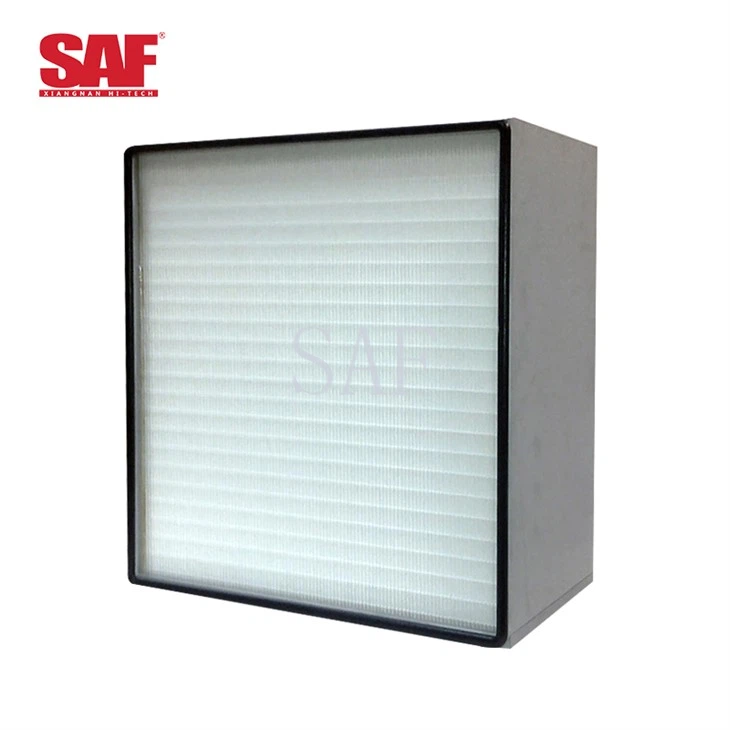
If you're installing hepa filters in a cleanroom for the first time, it's important to handle the filters with care to prevent damage to the delicate fiberglass material and maintain the integrity of the cleanroom environment. Proper handling and installation of hepa filters require practical techniques and precautions to ensure optimal performance. In this blog post, we will provide practical tips for handling and installing fragile hepa filters in cleanrooms, along with safe storing information.
1. Unpacking and inspection: When unpacking hepa filters, handle them with clean, dry hands or wear clean gloves to prevent contamination. Carefully inspect the filters for any visible signs of damage, such as cracks, tears, or bent filter media. If any damage is detected, do not install the filter and contact the manufacturer for a replacement.
2. Use dedicated tools: Use dedicated tools specifically designed for handling hepa filters. These may include filter clamps, filter holders, or filter installation frames. Avoid using tools or equipment that may put excessive pressure or bend the filters, as this can cause damage to the delicate filter media.
3. Gentle handling: Handle hepa filters with extreme care to avoid bending or twisting the filter media. Hold the filters by their edges or designated handling points, and avoid touching the filter media directly. Do not drop, stack, or pile filters on top of each other, as this can result in damage.
4. Proper installation: Follow the manufacturer's instructions for installing hepa filters in the designated filter housing or air handling unit. Ensure that the filters are inserted correctly and securely in the filter holders or frames, without any gaps or leaks. Avoid using excessive force or pressure during installation, as this can cause damage to the filters.
5. Safe storing: If you need to store hepa filters before installation, do so in a clean and dry environment. Store the filters in their original packaging or in clean, covered containers to protect them from dust, moisture, and other contaminants. Avoid storing filters in areas with extreme temperatures or high humidity, as this can affect their performance.
6. Regular maintenance: Regular maintenance of hepa filters is essential to ensure their efficiency and effectiveness. Follow the manufacturer's recommendations for filter replacement and maintenance schedules. During maintenance activities, handle the filters with extreme care, avoiding any bending or twisting of the filter media.
7.Proper disposal: When it's time to replace hepa filters, follow local regulations and guidelines for their proper disposal. Seal used filters in appropriate containers to prevent particles from escaping and contaminating the environment. Dispose of the filters in designated waste disposal areas, following proper procedures to prevent contamination.
These HEPA filters aren't cheap, and the replacement procedure isn't either. That being the case, you'll want to do everything you can to keep your filter operational for as long as possible and keep operational costs low. First of all, consider using a safe-change filter housing.
Next, study the cabinet design. What Class of cabinet do you need? And is it the right type? There will be detailed information about the internal fan and balancing damper arrangement – make sure that it can handle a pressure drop of at least 50% to accommodate a 'loaded' HEPA filter. Often, the best way to prolong the life of your filter is to use other tools and parts that contribute when the filter isn't 100% clean.
You can also optimise the air volume within the cabinet, and opt to install a motor reserve within the cabinet itself. Make sure that you're purchasing the correct size of filter – if it isn't appropriate for your lab procedures, then it will become loaded and less effective much quicker.
DOP testing is a vital part of the maintenance process. At the end of the day, these filters are mechanical parts like anything else you'll find in the make up of your unit, so you need to make sure the filters are regularly tested and inspected to identify any faults with them or the ventilation system.
Finally, maintain a clean and healthy lab. When you do this, you'll have cleaner, more sterile air everywhere within your facility. Your cabinets won't need to work as hard, and you'll be working with higher-quality air.
Through 18 years of focusing on air purification equipments , Shenzhen Xiangnan High-temp has been the leading supplier of the big companies such as Foxconn, LG , BYD , Oppo, Huawei etc for supplying the air clean systems. our Dr. engineers has almost 25 years of experience in the field of air filter so we have the ability to manufacture high quality air filters and clean room enquipments on the international markets, aways satisfying various of any designing demands from the clients.


